This is the first part of the lesson. The rest, the exercises and the reviews are in the app.
Cyrillic by hand: learning to read handwritten Serbian
By now you read a printed Cyrillic sign with confidence; that was the work of the lessons “Cyrillic print” and “Digraphia in practice”. But a printed letter and the same letter written by hand are one sign in two sets of clothes. Handwritten Cyrillic looks so different that a beginner who reads shop signs fluently gets stuck on the very first handwritten note. And you will have to read it: a form at a government office filled in by a clerk, a line a doctor adds by hand, a price chalked up at the market, a letter from an elderly relative. This lesson is about a separate skill: recognising Serbian letters in their handwritten shapes. We do not go through the alphabet again; here we look only at what its letters become in handwriting.
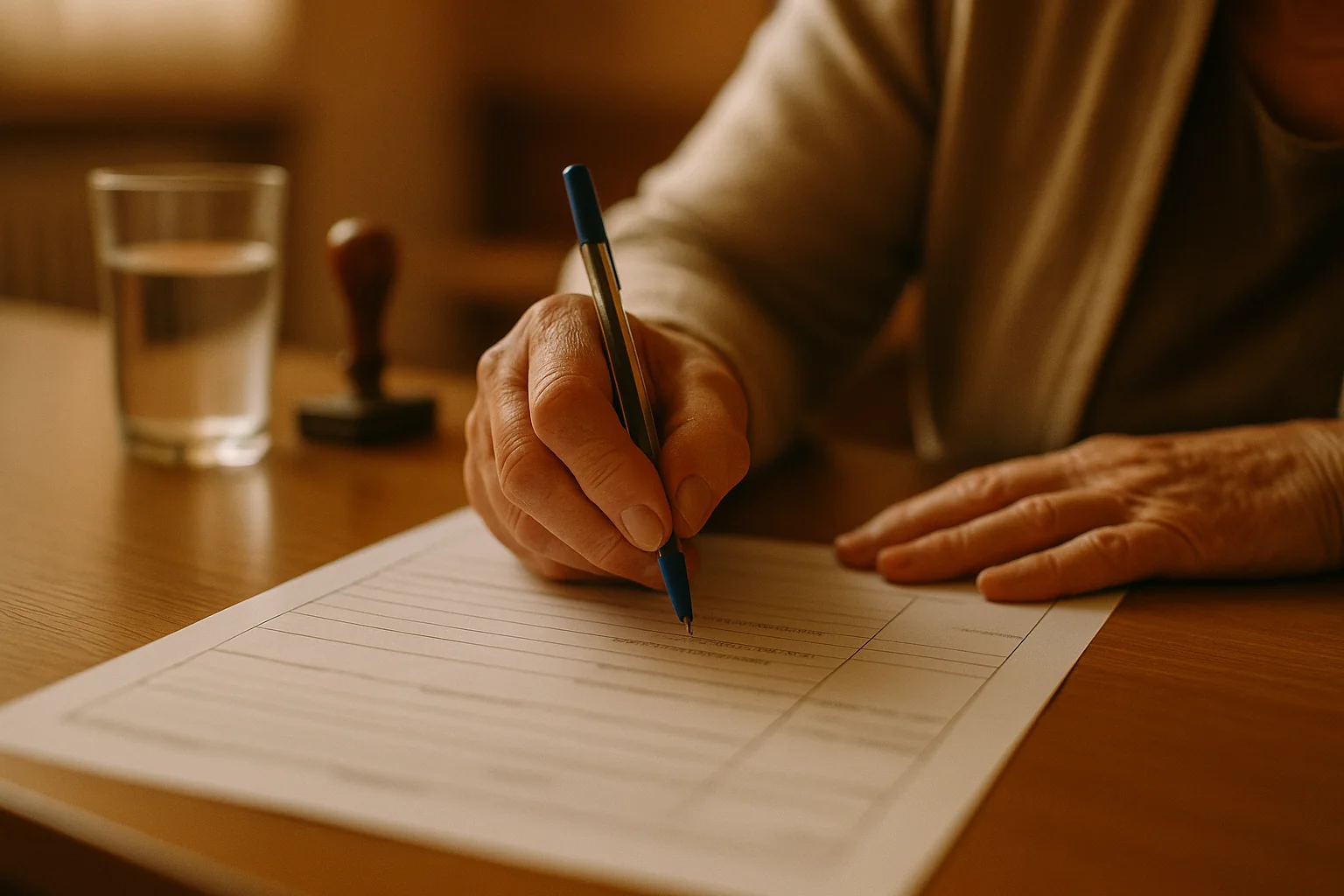
At an office, at the doctor's, at the market: Serbian text often reaches you handwritten.
Letters you won't recognise by hand
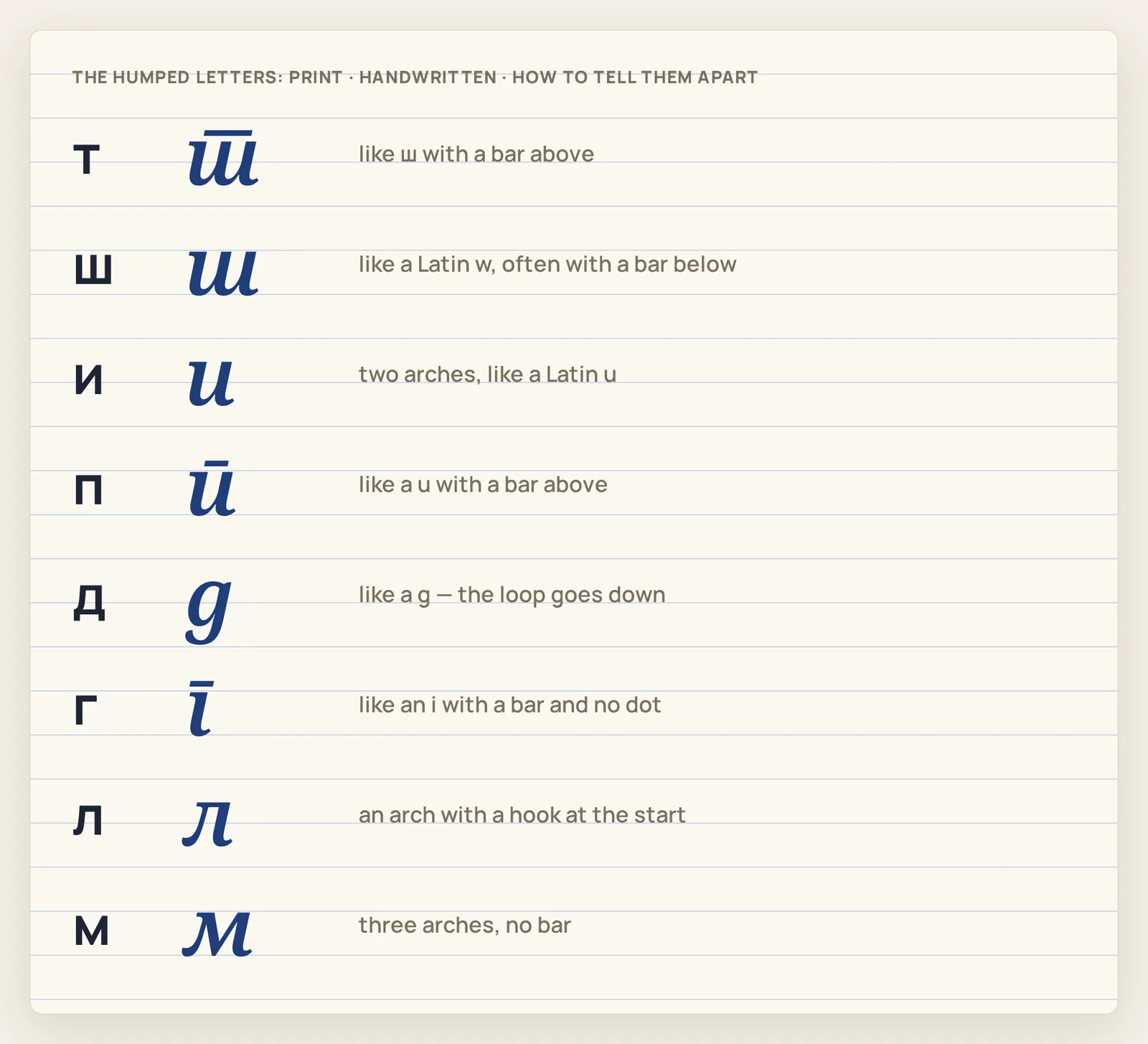
The main trap of cursive is the “humped” letters: several different letters turn into the same arches, and you can only tell them apart by the number of humps, by small marker strokes and by the sense of the word. Here are the most treacherous pairs of printed and handwritten forms. The Latin letters in the table are only a visual aid: they describe the outline, not the sound.
The humped letters up close: the printed form, the handwritten form and the clue that gives each one away.
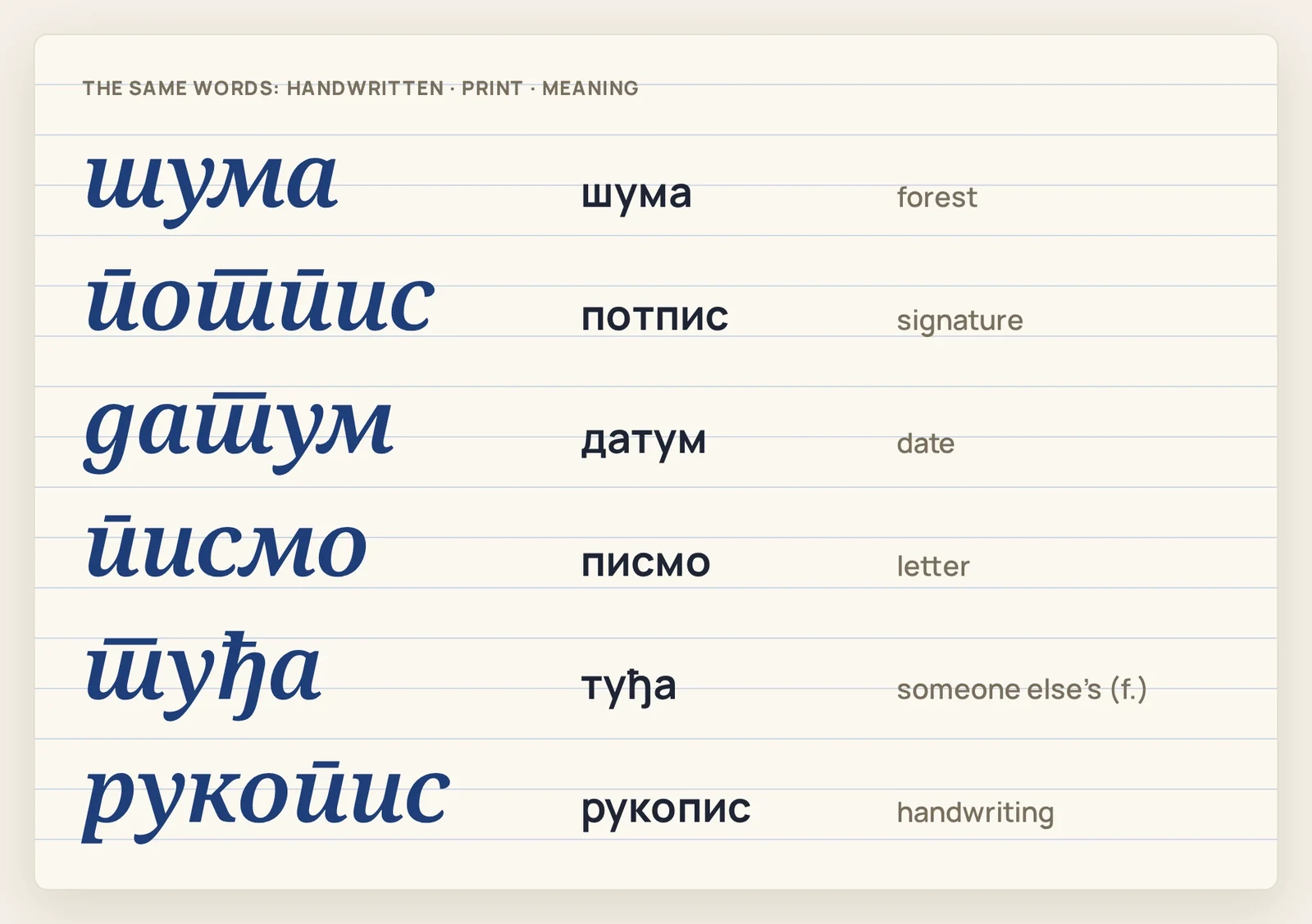
Here is the problem: by hand, т, ш, и, п, л and м are almost all the same arches. A word like шума (“forest”) turns into a picket fence of humps, and you can read it only by counting the arches and fitting in the meaning. An eye trained on print stumbles over such a line at first; that is normal and passes with practice.
The same words by hand and in print: cover the printed column and try to read the handwritten one.
Cheat sheet
The cheat sheet — everything essential from the lesson on one page. In the app it opens at any time.
Cyrillic by hand
Cursive: joined-up handwriting, the letters linked in one movement of the pen. The shapes smooth out into rows of look-alike arches and the printed outline is lost. Reading print and reading handwriting are two different skills. The strokes are the ones of your own Latin handwriting, but several letters look like unrelated Latin ones. The Latin letters below describe the outline only, never the sound.
Humped letters: hard to recognise by hand
Together т, ш, и, п, л, м make a picket fence of humps: шума (“forest”) can only be read by counting the arches and fitting in the meaning.
The marker bar
No bar (common in a quick hand)? The only judge is the meaning: guess the whole word, then check it against the number of humps.
Serbian's own letters by hand
Practise these six with your own hand too, or your entry on a form may be unreadable for the clerk.
Where you need it
Forms (образац), prescriptions (рецепт), chalked prices at the market, letters from elderly relatives. Form fields: Име и презиме, Адреса, Датум, Потпис. If a line won’t give way, ask (Možete li ovo da mi pročitate?); Serbs do too:
🍪No advertising cookies — only the essential storage that keeps you signed in and saves your progress. Privacy Policy